Project 03 · Case study
CFD validation · Heat transfer
Scraped-Surface Heat Exchanger CFD Validation
A two-dimensional ANSYS Fluent model benchmarked against published thermal-flow data for a scraped-surface heat exchanger.
Physical model
Reproducing the published configuration
The quarter-domain model represents aniline between a heated rotating shaft and a cooled stationary cylinder, with a narrow blade-tip clearance.
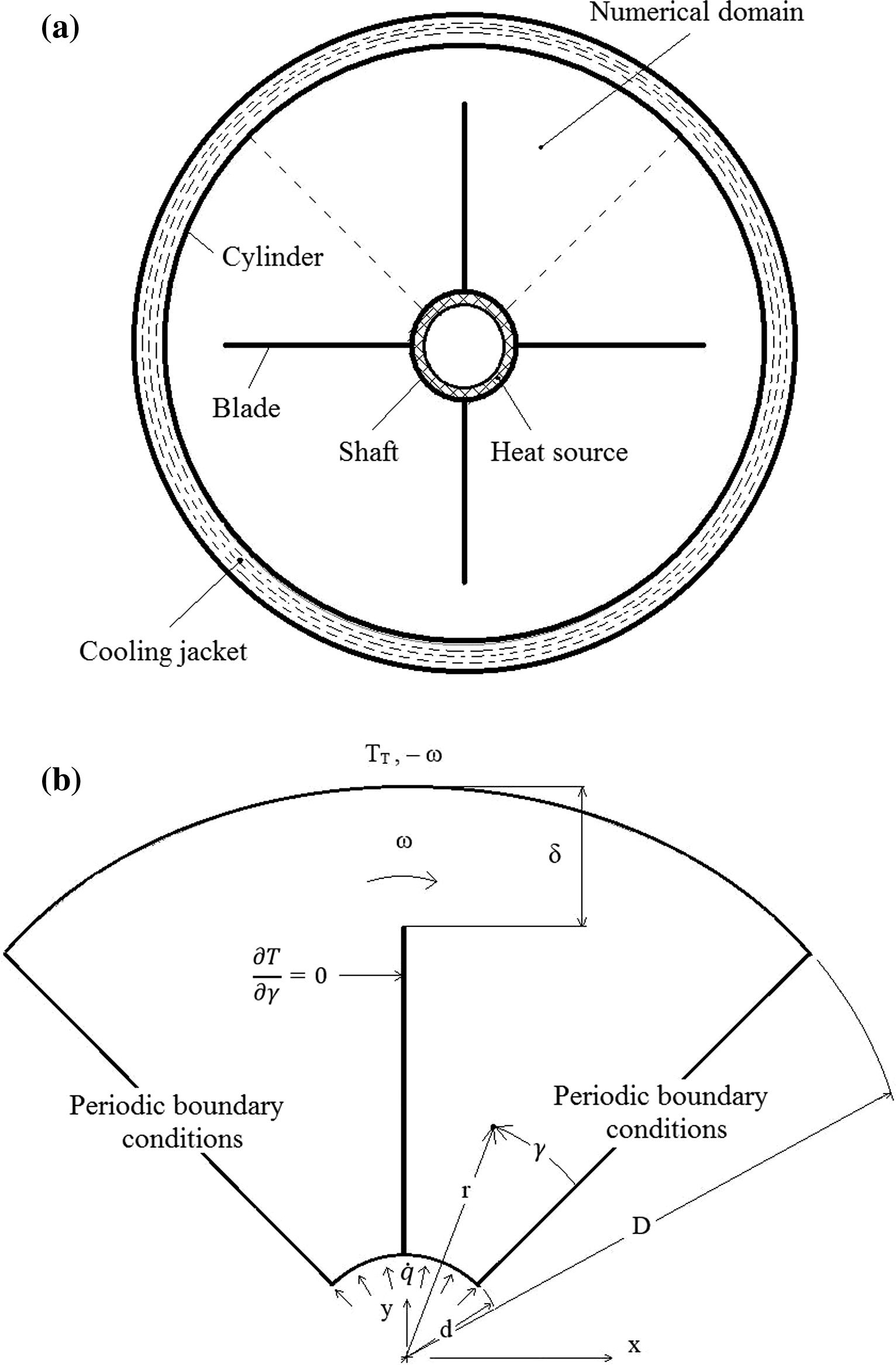
Shaft diameter d = 8.7 mm and blade-tip gap δ/D = 0.025.
Pr = 56 with angular velocity 13.861 rad/s.
Heat flux at the shaft and 283.15 K at the cylinder wall.
Laminar forced convection solved without sliding-mesh remeshing.
Mesh independence
Refinement where the physics is steepest
Three structured meshes were compared using the area-averaged cylinder Nusselt number as the quantity of interest.
Convergence
Residuals< 10−6
QT / QB0.9999873
|1 − QT/QB|1.27 × 10−5
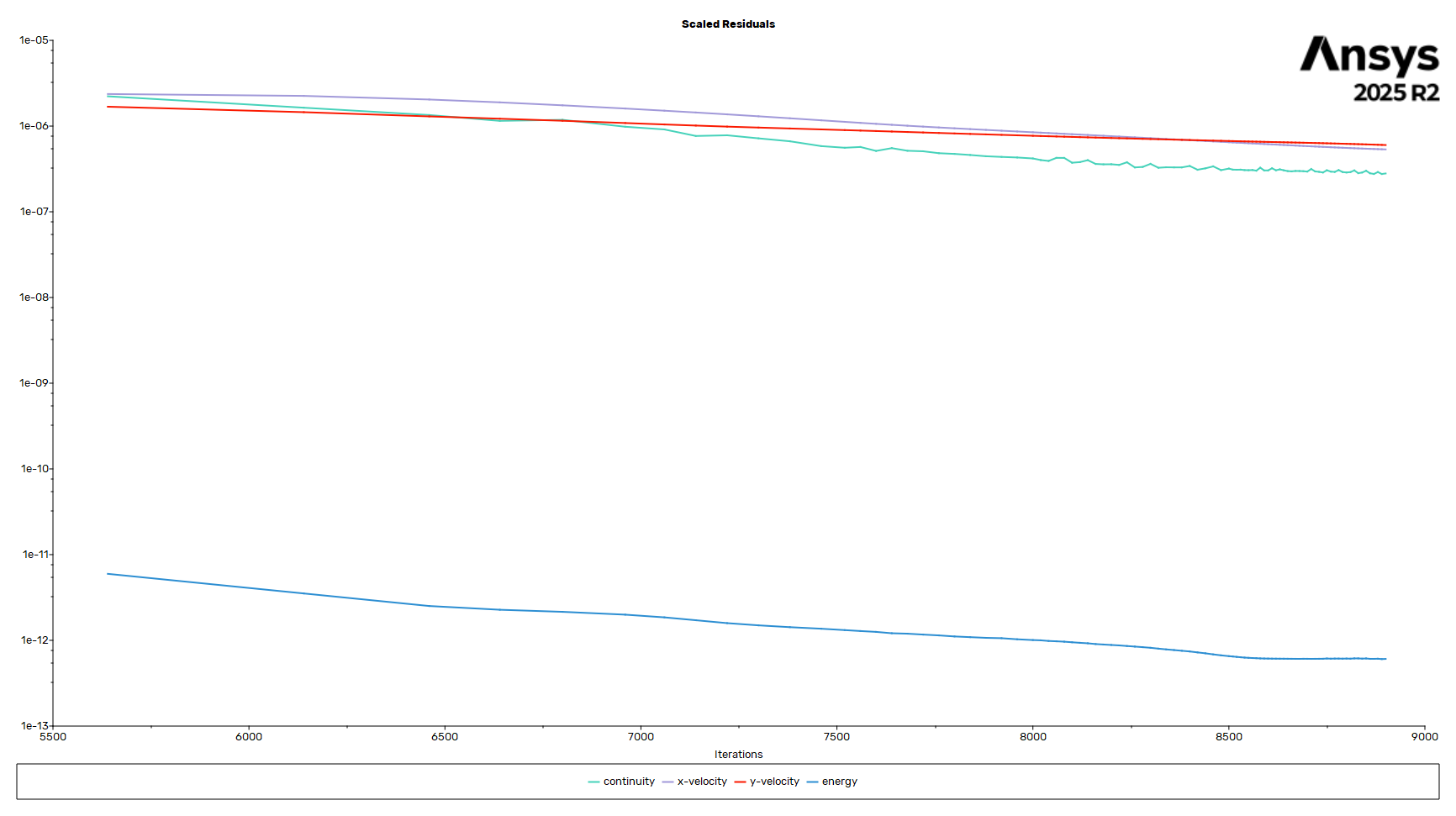
Residuals, heat balance and steady state
The final solution was checked using equation residuals and an independent wall heat-rate balance.
The finite 0.1 mm blade thickness changes the theoretical Nusselt-based stopping criterion, so the wall heat balance provides the decisive steady-state check.
Published-data validation
Three checks against the reference study
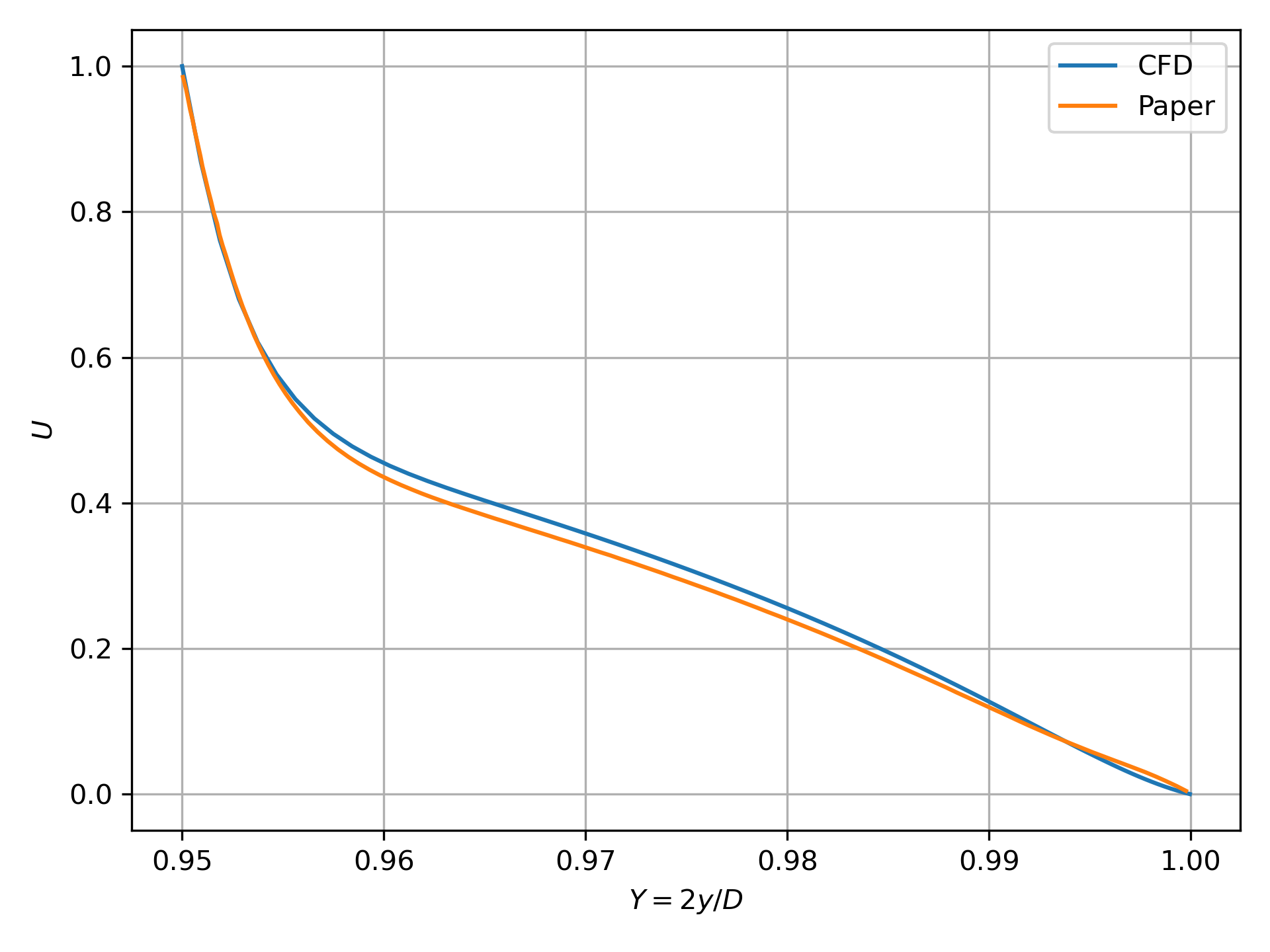
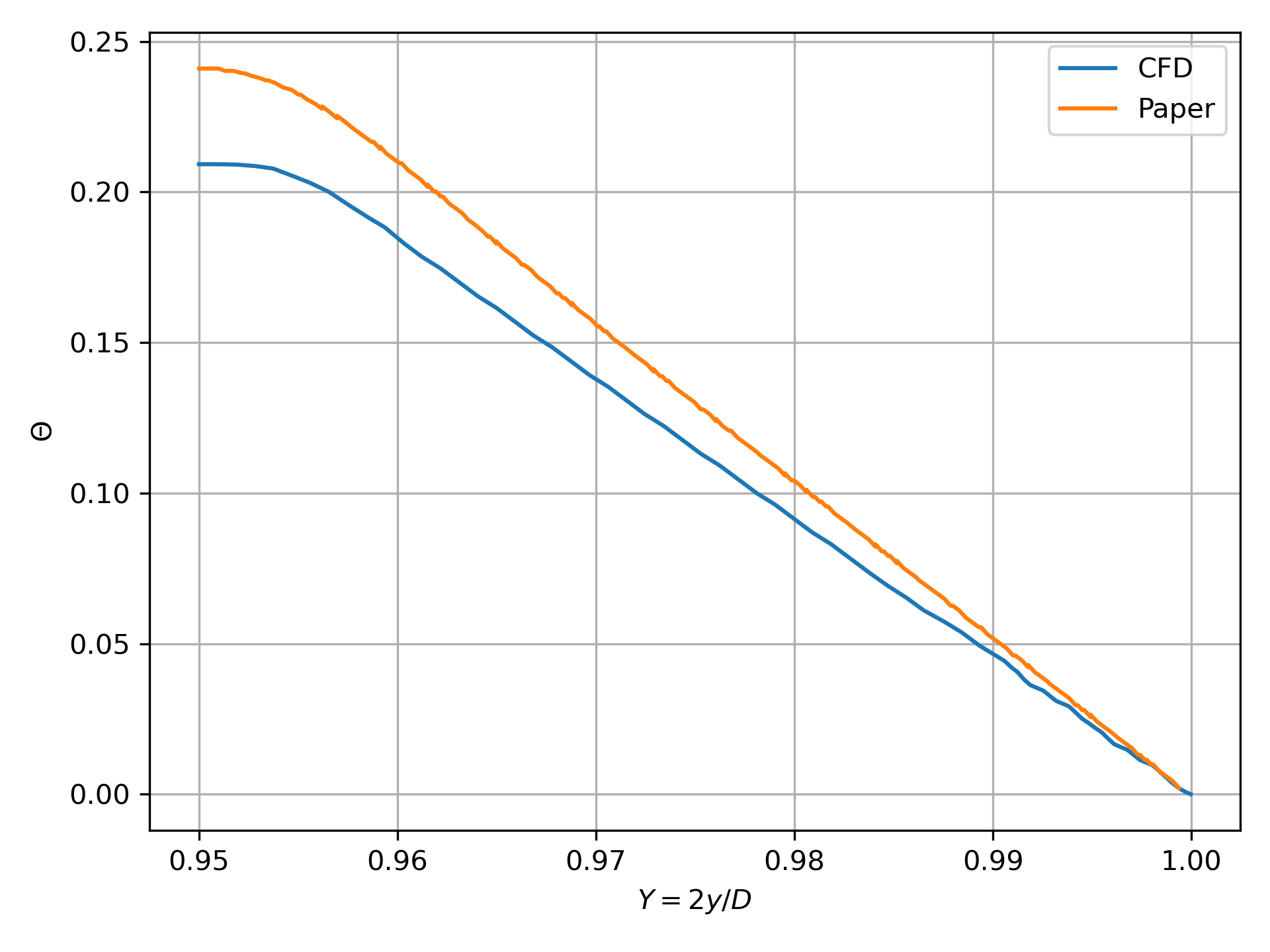
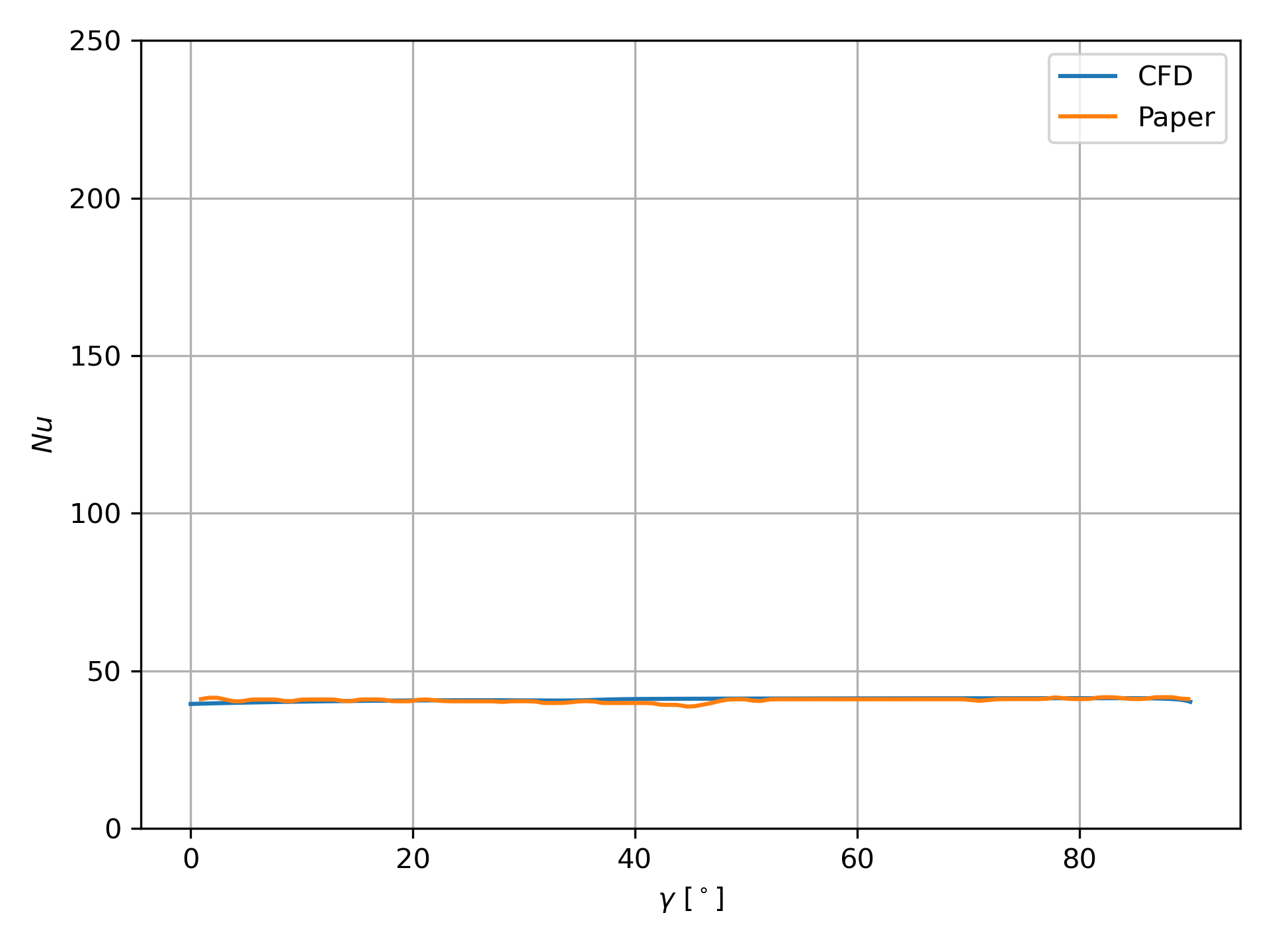
Velocity, temperature and local Nusselt behaviour were compared directly with digitized reference data at Rem = 1000, Pr = 56 and δ/D = 0.025.
Near-one-million-element showcase
A near-one-million-element flow-field showcase
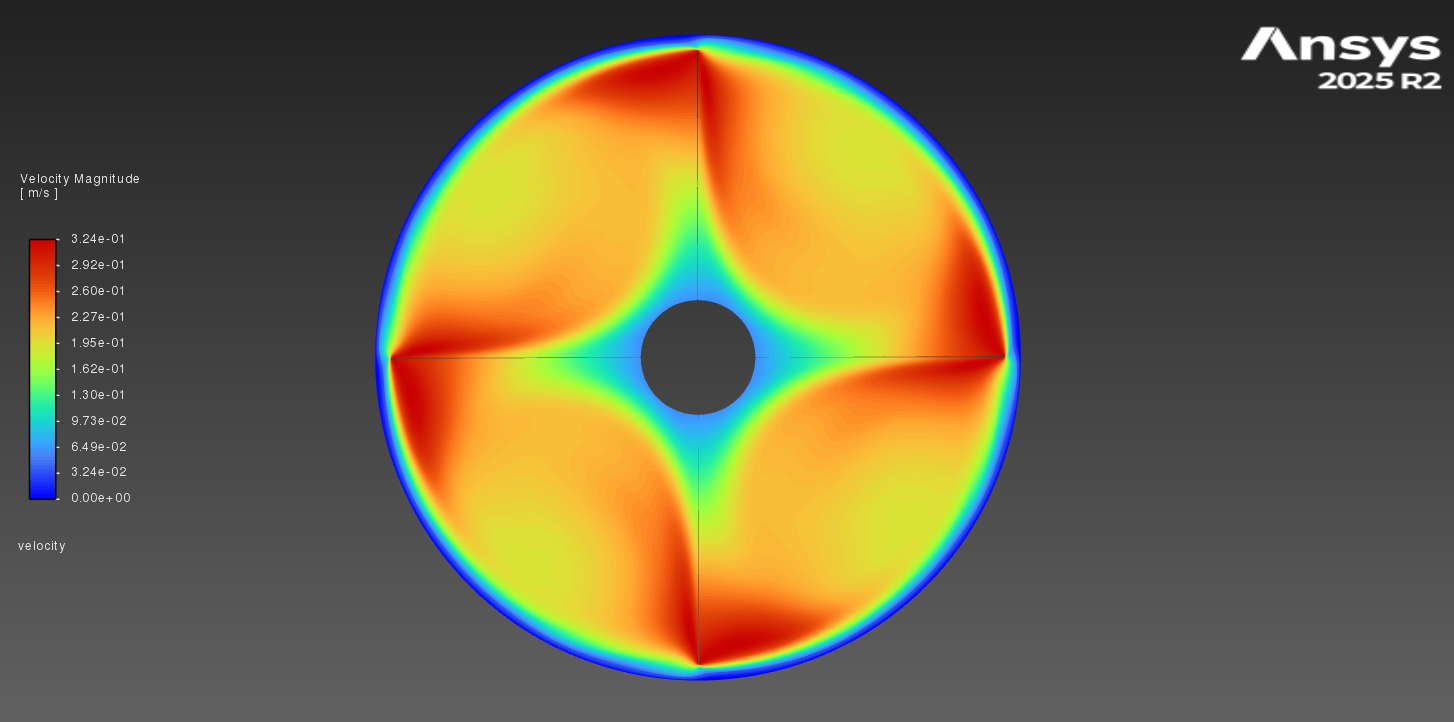
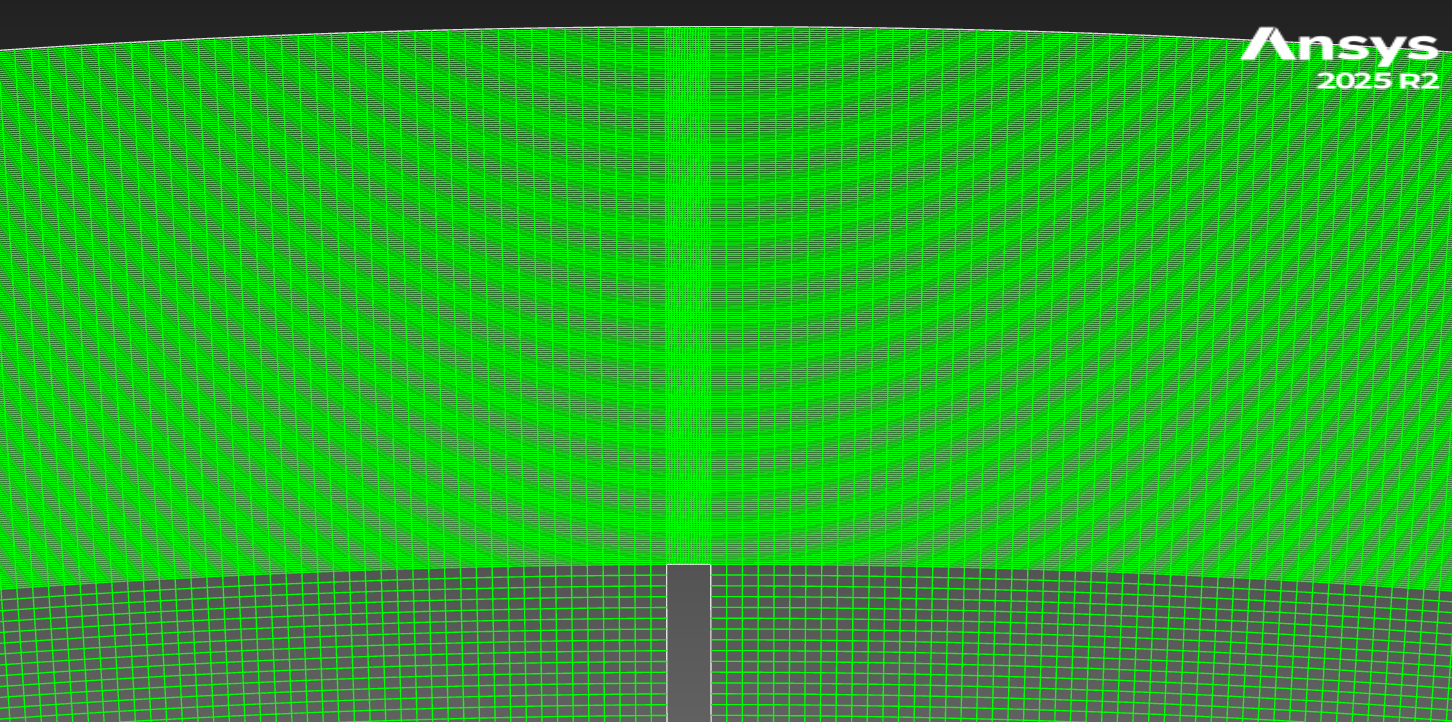
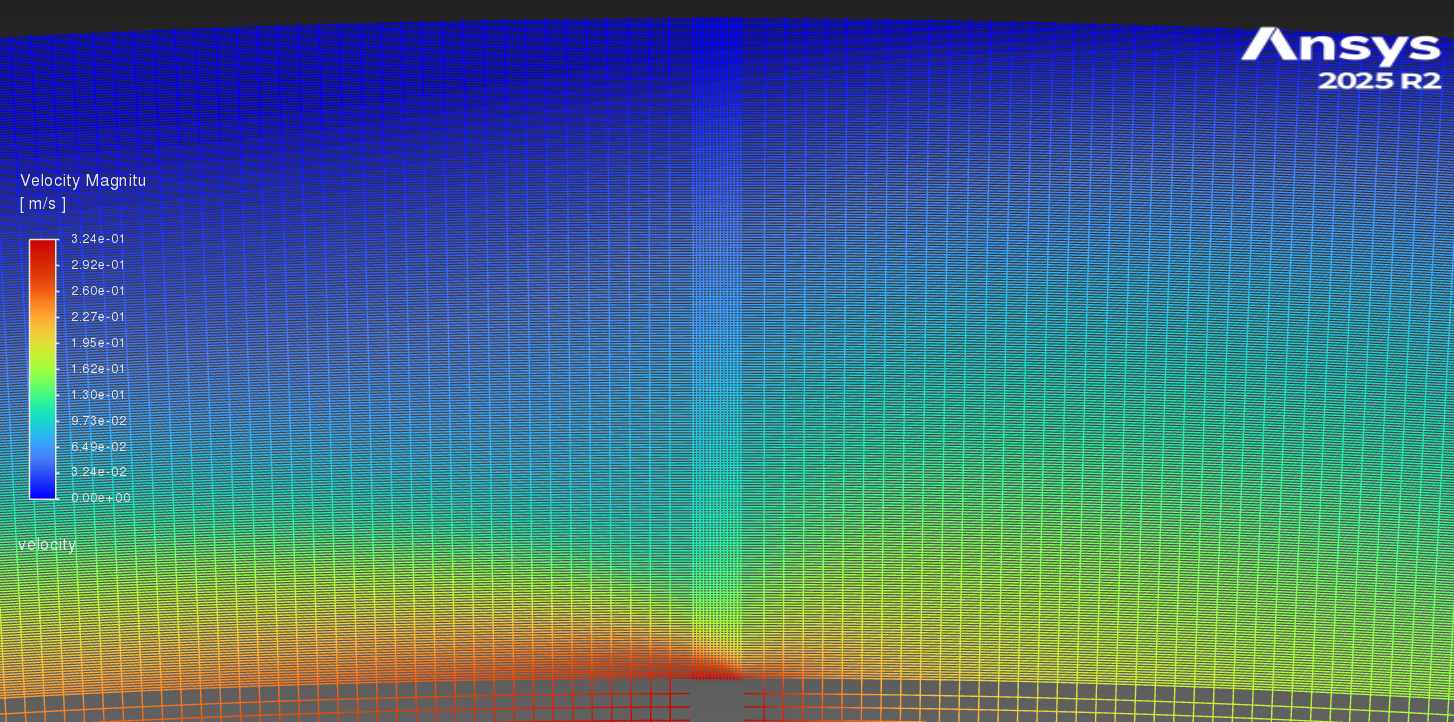
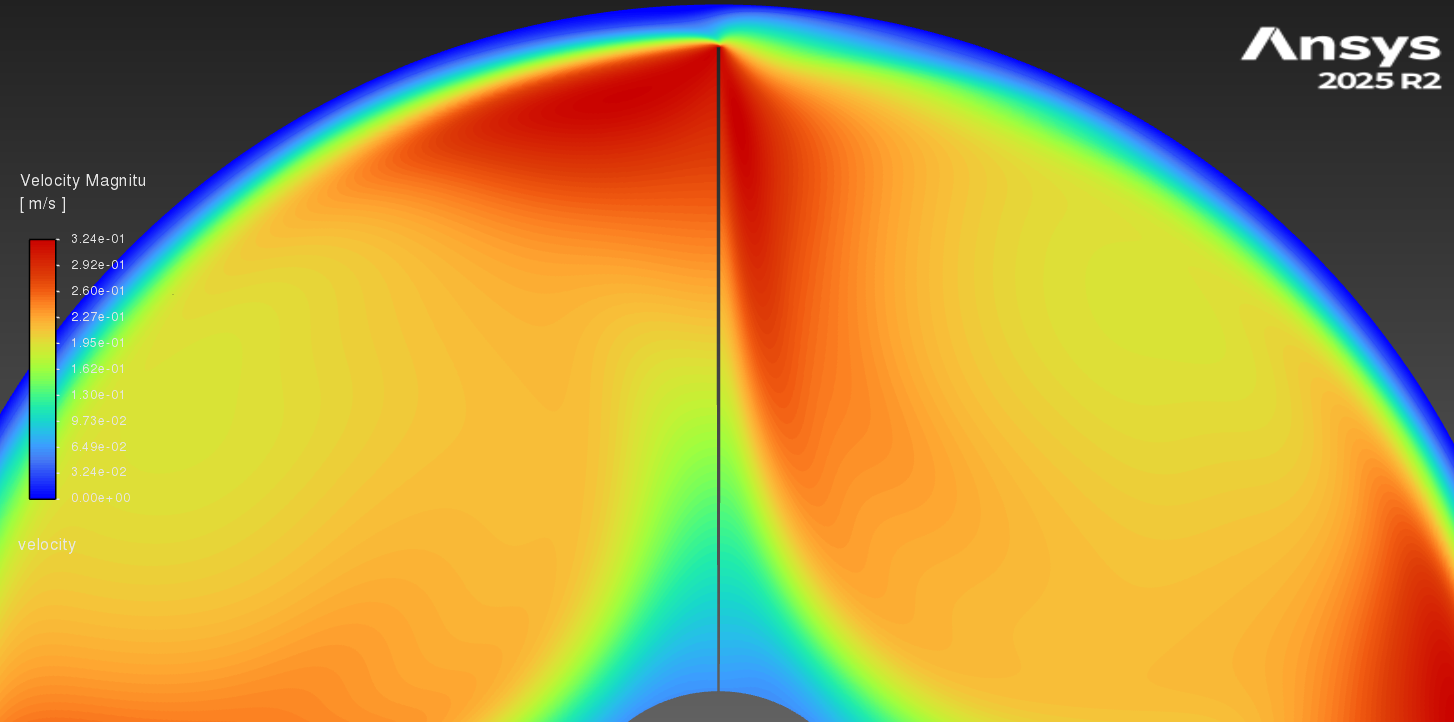
A visual look at the near-one-million-element case highlights the resolved domain mesh, the blade-tip velocity-gap structure and a closer view of the local velocity field.
Engineering outcome
A validated model with 0.81% Nusselt difference
The Fluent model reproduced the reported heat-transfer level while independently demonstrating mesh convergence and thermal balance.
The remaining profile differences are concentrated near the blade-tip region, where mesh transition and the thin thermal boundary layer have the strongest influence.
Validation reference Towards a better understanding of 2D thermal-flow processes in a scraped surface heat exchanger Blasiak & Pietrowicz · International Journal of Heat and Mass Transfer 98 (2016) · View published paper